


Most fitness plans collapse because they ask for too much. Forty minutes here. A gym trip there. New shoes and a tub of protein and a playlist. A military calisthenics workout plan goes the other way. It borrows the basic conditioning recruits go through in training and shrinks it to something a normal person can do in a living room. You need floor space and your own bodyweight and about 25 minutes. Below you’ll find a full 30 day schedule and form cues that keep your shoulders and wrists happy plus a few desi food ideas for recovery. Read it once and pick a start date. Tomorrow works fine.
What Is Military Calisthenics?
So what is military calisthenics exactly? It’s bodyweight training built on the moves you see in army physical training:
- Pushups
- Situps
- Squats
- Pullups
- Planks
- Running (a lot of it)
Nothing exotic. The goal is functional strength and muscular endurance which really just means you can keep moving after you get tired. A military calisthenics workout is also more structured than random home exercise. You do set reps in rounds with timed rests and now and then you test yourself against the clock.
Military Calisthenics vs Regular Calisthenics
Regular calisthenics workouts can go in any direction. Some people chase handstands. Others want muscle ups or the human flag. Those are skills and they can take years.
The military version is simpler. It cares more about being ready than being fancy. There are fewer moves to learn and running is built right into the routine so it doesn’t feel like a different hobby. If how to start calisthenics ever put you off because the tutorial opened with a pullup then relax. This style is easier to get into. Every exercise also has an easier option.
It Is Not Nonstop Suffering
Plenty of people picture a military workout as someone shouting while you do burpees until you collapse. Good beginner programs don’t work like that. Hard days sit next to easy days and the whole thing is built so you can still show up in week four. Sustainable beats heroic.
Why This Military Calisthenics Workout Plan Suits Beginners
A few practical reasons.
You can measure it. Eight pushups on Monday and eleven the following week is proof that something changed and you don’t need a scale to see it.
It needs almost no setup. No bag to pack and no commute.
The circuits get your heart rate up so you build strength and cardio in one session. Many beginner gym routines keep those on separate days.
Every move has an easy version and a hard one. So a 17 year old and a 45 year old can follow the exact same plan.
Will it make you ripped? It builds lean muscle well in beginners and it burns a fair amount of energy. How visible that muscle gets depends mostly on your food and your body fat. Be patient with that part.
Who Is This Plan For?
It’s written as calisthenics for beginners but plenty of people fit. Students with no budget. Office workers who only have a short window. Anyone preparing for an army or police or ISSB style physical test since the exercises match those events closely.
One caution. If you have an injury or a heart condition or any health worry then talk to a doctor before starting.
Before You Start
A bit of prep now saves you from quitting later.
What You Need
- A mat (wrists and knees will thank you)
- Comfortable shoes for running
- A phone timer
- A sturdy table for inverted rows if you don’t own a pullup bar
Warm Up and Cool Down
Give yourself five to ten minutes. Big arm circles first. Then leg swings and slow hip circles. Jog in place until your shoulders feel warm and loose.
After training stretch your chest and shoulders. Then hamstrings and calves. Stay in each stretch for about 20 seconds and let your breath out slowly.
Take Your Day 1 Baseline Test
Write down four numbers before you begin:
- Most clean pushups in one set
- Situps in one minute
- Longest plank hold
- Time to run or walk 1.6 km
Use the same versions on day 30. If you did knee pushups on day 1 and full ones on day 30 you can’t really compare the two. Save your numbers in your phone.
Safety Tips
A burning feeling in your muscles is normal. A sharp pain inside a joint is not so stop right there. Wrists sore during pushups? Try them on your fists. And sip some water during the session.
Please go easier than your ego wants in week one. The usual story is a huge first week and a miserable second week and then nothing.
The Core Exercises
This program only uses a handful of basic calisthenics exercises. Get these right and most other bodyweight plans will make sense to you.
Military Pushups
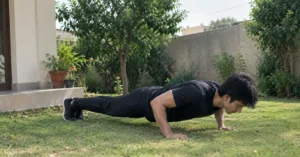
Put your hands just under your shoulders. Keep your elbows near your ribs. Don’t let them wing out to the sides. Your body should be one straight line from head to heels. Go down until your chest is about a fist from the floor. Then push back up.
Too hard? Start on your knees or put your hands on a bench. Go back to the floor once it feels easy. Diamond and wide and decline versions can wait.
Pullups and Inverted Rows
Almost nobody can do a pullup on day one and that’s normal. Lie under a sturdy table and grab the edge. Keep your body flat and pull your chest up to it. That’s an inverted row.
You can also jump to the top of a pullup and lower yourself as slowly as you can. Five seconds on the way down builds real strength. A resistance band helps too.
Squats and Lunges
Start by sending your hips back and keep your chest up. Your knees should point the same way as your toes. Press through your heels to stand.
For lunges try the reverse version. Step back instead of forward and lower your back knee toward the floor. It’s usually kinder on beginner knees.
Planks and Situps and Leg Raises
In a plank squeeze your glutes and pull your belly button toward your spine so your hips don’t sag. Situps and leg raises train your abs and hip flexors and you’ll find them in most military fitness tests. Start with 20 second planks. Add a few seconds each week.
Conditioning Moves
Burpees and mountain climbers get your heart pumping quickly. Jumping jacks and high knees do a similar job but they’re easier on you. Got a sturdy chair or parallel bars? Then dips are a good add on for your triceps.
Common Mistakes in a Military Calisthenics Workout Plan
Sagging hips ruin more pushups than anything else. Half squats come second. After that you get flared elbows and rushed reps done only to reach a number.
Film yourself from the side with your phone. It’s slightly humbling and extremely useful. Fix one thing at a time.
Your Free 30 Day Program
This free calisthenics workout plan doubles as a calisthenics workout plan for beginners. It runs four weeks. Rest 30 to 60 seconds between exercises and about two minutes between rounds.
Week 1 of the Military Calisthenics Workout Plan: Learn the Moves
This week is about movement quality and building a habit. Don’t chase exhaustion.
- Day 1: Baseline test.
- Day 2: 3 rounds of 8 pushups (knees are fine) then 12 squats then a 20 second plank then 20 jumping jacks.
- Day 3: An easy 20 minute walk or light jog and some stretching.
- Day 4: 3 rounds of 10 incline pushups then 10 lunges then 15 situps then a 20 second plank.
- Day 5: Rest.
- Day 6: Do Day 2 again and add two reps to everything.
- Day 7: Rest.
Week 2: Add More Volume
You train four days this week. It’s a bit more work but nothing crazy.
- Days 8 and 10: 4 rounds of 12 pushups then 15 squats then 10 mountain climbers on each side then a 30 second plank.
- Day 9: Interval run. Jog for 1 minute and walk for 1 minute. Repeat that 8 times.
- Day 11: 4 rounds of 10 inverted rows or assisted pullups then 10 dips then 15 leg raises.
- Days 12 to 14: One active recovery day then Day 8 again then a full rest day.
Week 3: Turn Up the Intensity
This is where the sessions start to feel properly military.
- Days 15 and 17 and 19: 5 rounds of 15 pushups then 20 squats then 8 burpees then 8 pullups or rows then 8 dips then 12 leg raises.
- Day 16: A steady 20 minute run.
- Day 18: An easy walk and some stretching.
- Day 20: A short circuit.
- Day 21: Rest.
Week 4: Peak and Retest
This is the hardest week and it ends with your retest.
- Days 22 to 26: Mix your hardest circuit with running intervals and easy recovery days.
- Day 27: A light full body session.
- Day 28: Rest.
- Day 29: Gentle stretching only.
- Day 30: Repeat your Day 1 baseline test and compare the numbers.
Training in Hot Weather or Ramadan
Training on a rooftop at noon in July is a bad idea. Go early in the morning or after Maghrib. In Ramadan give yourself about an hour after iftar and keep the session a little shorter. Drink water through the evening and skip personal record attempts on those days.
Going Further After Day 30
Run the program again with harder moves. Add diamond pushups and jump squats and wall sits. Work toward archer pushups and pistol squat progressions and strict pullups. A backpack filled with books adds weight once bodyweight feels easy. Each week try to squeeze in two or three more reps on every exercise.
A 15 to 20 Minute Version
On busy days do 4 rounds of 10 pushups and 15 squats and 10 mountain climbers per side then a 30 second plank. It’s short but it still counts.
Military Calisthenics for Women
Military calisthenics for women follows the same plan with a different starting level. Many women begin with incline or knee pushups and assisted pullups and move up at their own speed. A military calisthenics workout for women builds strength and bone density and stamina. It won’t make you bulky unless you train and eat for size on purpose.
If you search military calisthenics women you’ll find programs that lean more on lower body and core work. You can borrow that idea here by adding an extra squat or plank round. You’ll also see the spelling calistenics online but it’s the same training.
Cardio and Running
Running is the backbone of most military workouts. Strength alone won’t carry you far if your endurance is weak.
New to running? Jog for one minute then walk for one minute. After two weeks try two minute jogs. Keep stretching them until you can cover 1.6 km without stopping.
Food for Better Results
Your muscles need protein to rebuild so try to have some with every meal. Eggs and daal and chana are good options. So are chicken and fish and yogurt. All of them are affordable.
A simple day could look like this:
- Breakfast: two eggs and a roti
- Lunch: daal and rice and a big salad
- Snack: roasted chana
- Dinner: chicken or vegetables with a roti
- After training: a glass of milk
Drink water through the day and cut down on sugary drinks. When it’s hot add a pinch of salt and a squeeze of lemon to your bottle.
Recovery: Rest and Sleep and Soreness
Your muscles grow when you rest and not while you’re training. Try to get seven or eight hours of sleep. You’ll feel the most soreness a day or two after a tough session. That’s normal in the first two weeks.
Walking slowly and stretching a little will loosen you up quicker than lying still. If the pain feels sharp or sticks around for days then take a step back.
Tracking Your Progress
Write down your reps and rounds and run times after every session. A notebook is fine. A note on your phone is fine too. Going from 8 pushups on Day 2 to 18 on Day 30 feels better than any motivational quote.
Progressive Overload in Simple Words
All it means is making things a bit harder as you go. One more rep. One more round. Ten seconds less rest. Or take three seconds to lower yourself on each pushup.
How to Break Through a Plateau
If your numbers don’t move for two weeks change one thing only. Try a harder version or get an extra hour of sleep or add some protein. Everybody gets stuck sometimes. It usually means your body is ready for something new.
Match the Plan to Your Goal
Fat Loss
Keep your sessions regular and walk for 30 minutes on rest days. The easiest first step is cutting sugary drinks. Eat a little less than you burn and the circuits will do the rest.
Muscle Gain
Slow your reps down. Take three seconds to lower yourself on pushups and pullups. Choose harder versions and eat enough protein and calories. Skinny beginners often see fast results from pushups and rows and squats alone.
Army and Police and ISSB Test Preparation
This plan covers the main events in a physical test: pushups and situps and pullups and running. Once a week do a practice run of the test just as it will happen on the day with a timer and the full range of motion. Judges count only clean reps so train the same way from the start.
Military Calisthenics vs the Gym
The gym is excellent for heavy lifting. Bodyweight training builds relative strength and endurance for free. Plenty of people combine both but a beginner can make good progress with bodyweight alone.
Frequently Asked Questions
Can beginners do military workouts?
Yes. Every exercise here has an easier version and the first week is deliberately light.
Should I train every day?
No. Four or five days a week is plenty and the rest days are when you actually get stronger.
Does a 15 minute session work?
It does if you push the effort. A short circuit done properly beats a long lazy one.
How long until I see results?
Most people notice they’re stronger after about two weeks. Visible changes usually take four to eight weeks depending on food and sleep and how regular you are.
What if I can’t do a single pullup?
Use inverted rows or slow negatives or resistance bands. The first pullup usually arrives with steady practice.
Do I need equipment?
No. A mat and a timer and your bodyweight are enough to finish the whole plan.
Final Thoughts
Strength mostly comes from showing up and doing simple things well. This military calisthenics workout plan gives you a clear path whether you’re curious about military calisthenics or searching for a free calisthenics workout plan that needs no equipment. Do your baseline test and take the weeks one at a time. Whether it’s your first calisthenics workout or your hundredth the structure keeps your progress honest. Start today and compare your numbers on day 30.